
September 1, 2026
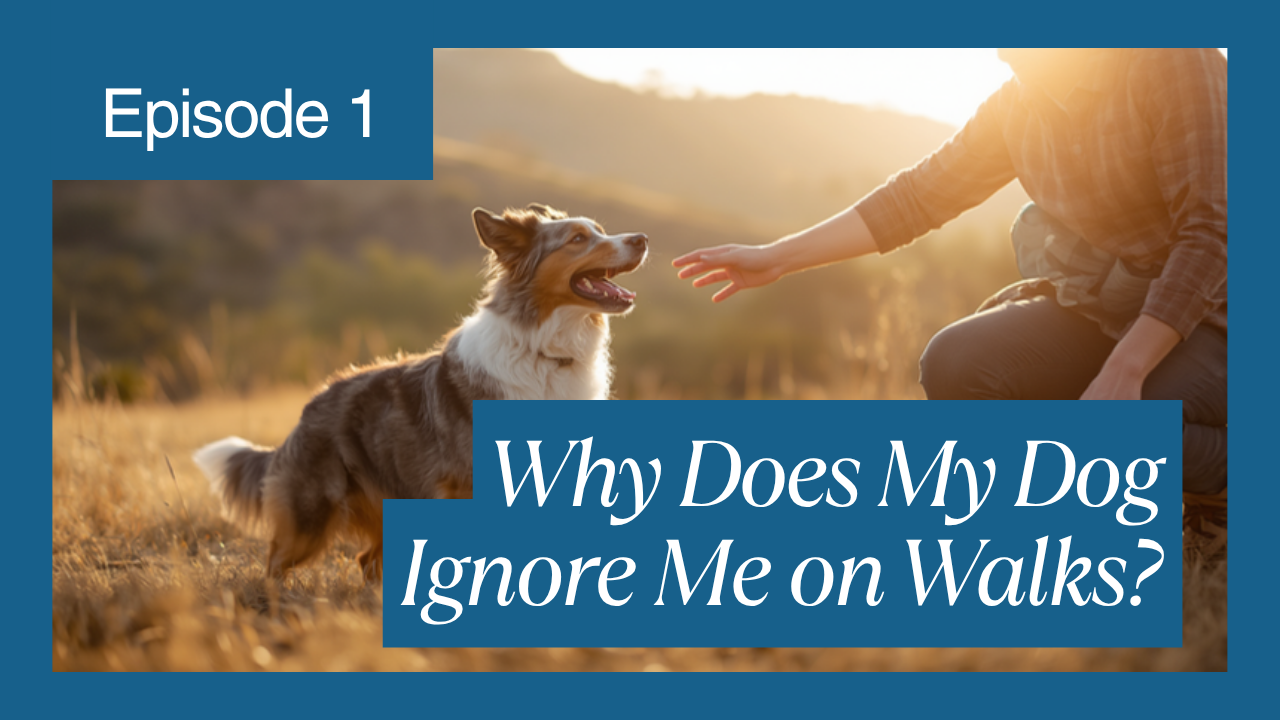
Why Does My Dog Ignore Me on Walks? (And How to Fix It)
Here is the uncomfortable bit. If your dog ignores you on walks, it is rarely a training problem. It is an engagement problem. You have spent months being the person on the other end of the lead while the footpath, the grass and every dog in the suburb did the entertaining.
Your dog is not defying you. He simply never learned that you were part of the walk.
Why Does My Dog Ignore Me on Walks but Listen at Home?
At home, nothing competes with you. No magpies, no bin chickens, no dog barking two houses down. Your dog looks at you because you are the most interesting thing in the room.
Step outside and you drop down the list. Fast. The environment is louder, richer and more rewarding than anything you are offering. Obedience does not fail outdoors. Attention does.
Engagement Comes Before Obedience
Most owners try to fix this by saying the cue louder. Sit. SIT. SIT. All that teaches your dog is that the word means nothing the first three times.
Attention is a skill your dog practises, and right now plenty of dogs are practising ignoring their owner for forty minutes a day. Every walk where your dog scans the street and never checks in is a rep in the wrong direction.
So flip it. Reward the check in. The moment your dog glances back at you without being asked, mark it with your marker word and pay it. That glance is the foundation of every other behaviour on the lead.
Start Before You Leave the House
If your dog cannot give you a look in the hallway, he has no chance at the front gate. Engagement gets built in boring places first, then taken outside.
Spend thirty seconds at the door. Wait for a look. Mark, reward, then open the door. If the lead goes on while your dog is spinning and screaming, you have already told him the walk starts in that state.
Outside, distance is your volume dial. If your dog cannot hear you three metres from another dog, you are too close. Move to twenty metres. Get the check in there. Then close the gap over days and weeks, not minutes. This is the step most owners skip, and it is why pulling and reactivity stall out. A dog who cannot think cannot learn.
What to Try Today
One walk. No cues. Say nothing for the whole lap around the block except your marker word. Every single time your dog looks at your face on his own, mark it and reward it. Count how many you get.
Do it again tomorrow and the number will climb. That number is your relationship on the lead, measured honestly.
Attention work moves the needle on a lot of things, but it is not a standalone fix for genuine reactivity or anxiety. If your dog cannot settle enough to look at you at any distance, that is worth proper eyes on it. Walkys Dog Training Academy runs 1:1 sessions and group programs, and we build the engagement piece with you instead of handing you a list of cues. Have a look at walkys.com.au.