
October 6, 2026
Where Should My Dog Walk on a Lead? The Heel Zone Explained
Most owners think a good walk means a dog who stays "somewhere nearby". Then they wonder why the lead is tight by the second letterbox. Here's the problem: if your dog doesn't know where they're meant to be, they'll default to the front. And the front is where the pulling lives.
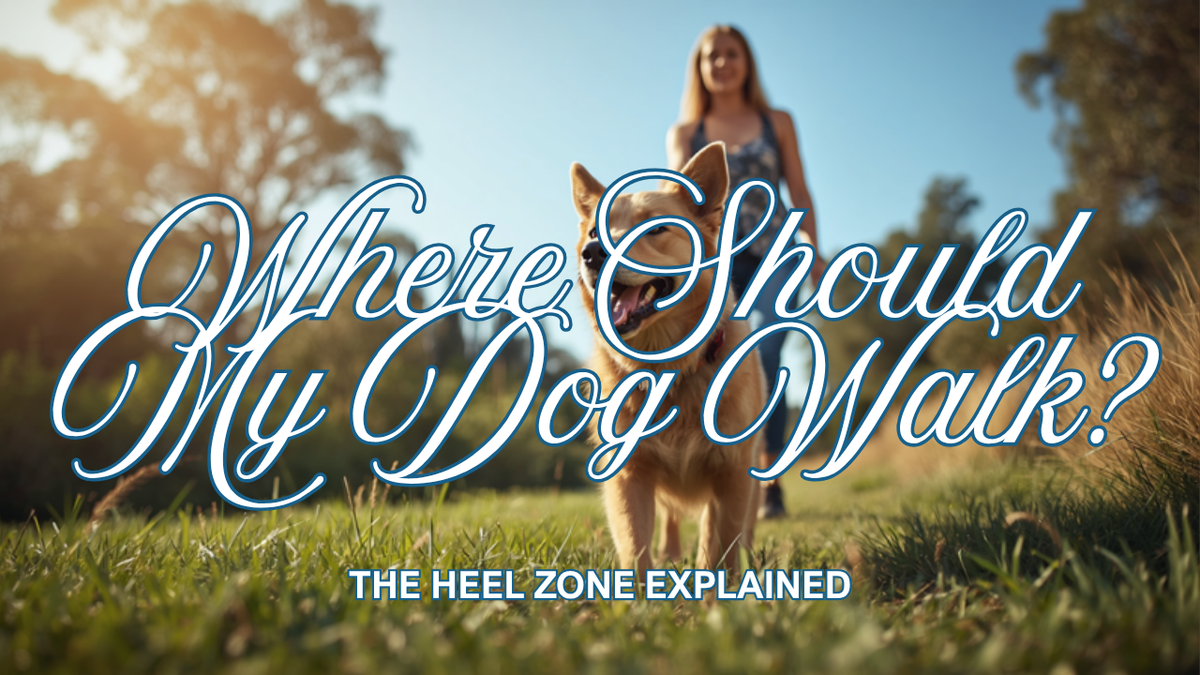
Where Should My Dog Walk on a Lead?
In the Heel Zone. Your dog's head sits roughly in line with your knee, right beside you. Not a metre ahead. Not weaving behind you. Beside you.
This isn't about military precision. It's about giving your dog a clear answer to the question they're constantly asking: "Where's the good stuff?" When the answer is "right here next to my human", the walk gets a whole lot calmer.
Why Does Walking Beside You Stop Pulling?
Because dogs repeat what pays. If walking ahead gets them closer to smells, other dogs and that bin chicken by the bench, ahead wins every time. Your job is to make that spot beside you the most rewarding place on the footpath.
That means reinforcing the position, not just correcting the mistake. When your dog is in the zone, mark it with a clear "yes" and reward. When they drift ahead, a slight lead signal guides them back, and you reward again.
What Mistakes Make Loose Lead Walking Fail?
Two come up constantly.
Only rewarding after the dog gets back into position. If you wait until they've already drifted, you're paying for the drift. Reward before they wander too far. Catch them doing it right, and often.
Walking too fast. A dog who is jogging to keep up will lurch ahead, and then you're back to a tight lead. Keep a steady, controlled pace so staying in position is actually achievable.
Your posture matters too. Stand tall, walk with purpose, and your dog will usually match your energy. Hunched, hesitant and glued to your phone? They'll fill the gap.
What to Try Today
Pick a quiet spot. Your hallway, backyard or a calm street will do. Walk 10 steps with your dog's head near your knee. The moment they're in position, say "yes" and reward right beside your leg. Do it again. Repeat for five minutes, rewarding often.
That's it. Short, boring and effective. Once it's easy, add a little distance, a little more time, and then a few distractions, one at a time. If they struggle, go back a step. Proofing takes time.
This is one piece of the puzzle. If your dog's pulling comes with lunging, barking or real reactivity, it needs more than a single technique, and that's where hands-on help makes a difference.
Want help building calm, confident walks? Head to walkys.com.au to explore our 1:1 sessions and group programs, and let's get your dog walking beside you, not towing you.