
July 9, 2026
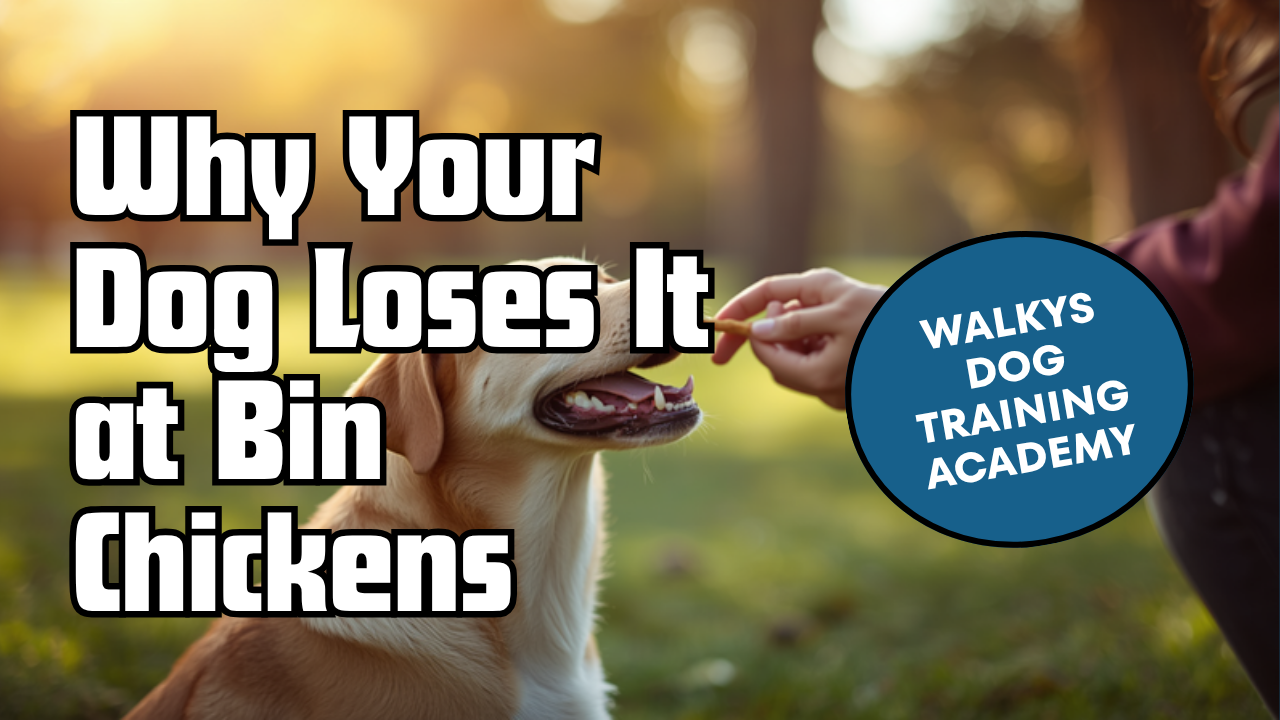
Why Your Dog Loses It at Bin Chickens (And What to Do About It)
There's a moment most Aussie dog owners know. You're halfway through a lovely walk, an ibis struts out of a bin, and your calm dog turns into a lunging, barking mess. Most owners respond by yanking the lead and growling "leave it". Here's the hard truth: that reaction is doing nothing. By the time your dog has exploded, the training window has already closed.
Why Does Your Dog Lose It at Birds?
Two things are happening. First, prey drive. Birds move fast, erratically, and low to the ground. To a dog, a bin chicken is a squeaky toy with a jetpack. Chasing is self-rewarding, no treat required.
Second, your dog goes over threshold. That's the point where arousal climbs so high the thinking brain switches off. Over threshold, your dog physically cannot process your cues. You're not being ignored out of defiance. The part of the brain that listens is offline.
Corrections After the Explosion Teach Nothing
Yanking the lead mid-lunge doesn't teach "don't chase birds". At best it teaches nothing. At worst it teaches your dog that birds appearing means the lead goes tight and their human gets tense, which makes the next encounter worse.
If your dog is already barking and lunging, your only job is to add distance. Walk away, calmly, without commentary. Training resumes later.
Distance Is the Tool Everyone Skips
Every dog has a distance at which they can notice a trigger and still think. Fifty metres from the ibis, your dog might glance at it, then check back in with you. Five metres away, forget it.
Your job is to find that distance and work there. When your dog notices the bird and stays with you, mark it with a crisp "yes" and reward. Over weeks of practice, that distance shrinks. This is slow and unglamorous, and it works. There's no shortcut that skips it.
What to Try Today
On your next walk, spot the trigger before your dog commits. The instant your dog notices a bird (ears up, body stiffens, that little freeze before the launch), say their name once. If they look at you, mark and reward generously.
If they can't look at you, you're too close. Add distance and try again. One clean rep at the right distance beats ten failed reps up close.
Bird obsession is manageable for most dogs, but if your dog's reactivity extends to other dogs, people, or bikes, or feels bigger than excitement, don't tackle it alone. It's one piece of a larger puzzle, and the right help speeds everything up. At Walkys Dog Training Academy we work through reactive triggers step by step in 1:1 sessions and group programs. Come say hello.