June 5, 2026
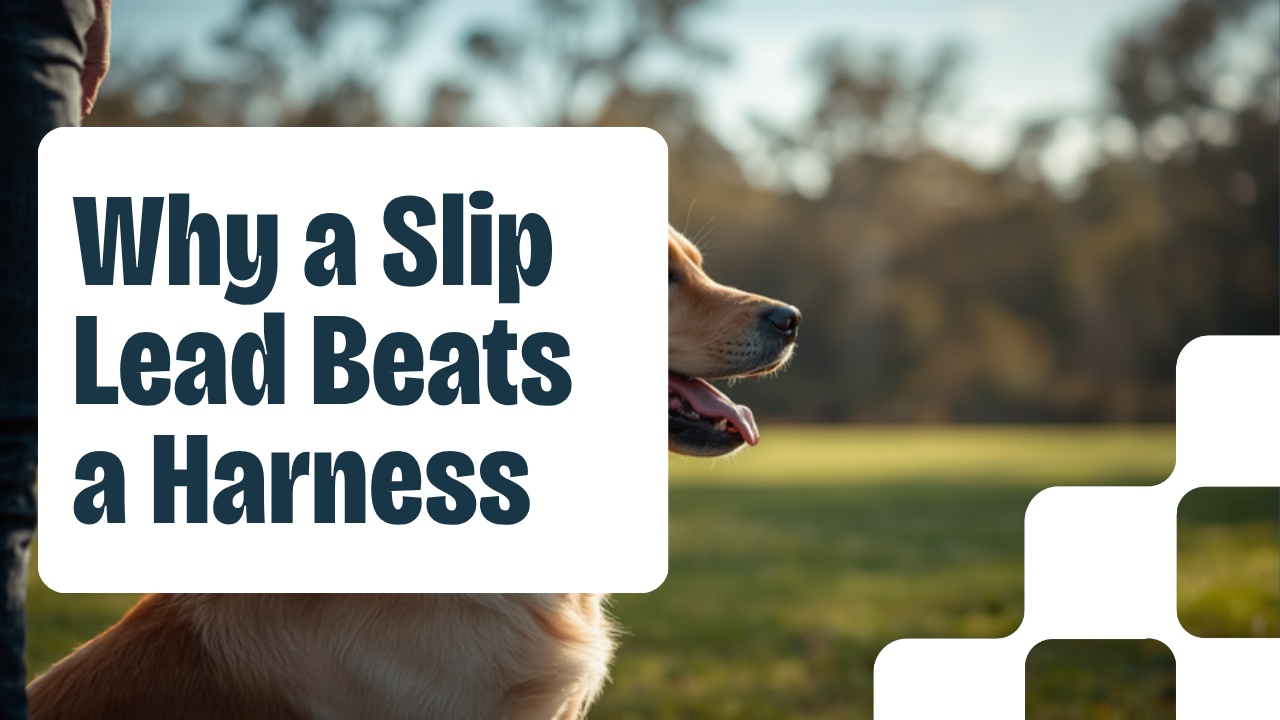
Why a Slip Lead Beats a Harness for Everyday Dog Walking
You bought the no-pull harness. You followed the instructions. And your dog still tows you down the footpath like a sled team chasing a bin chicken. That is not bad luck, and it is not a broken dog. A harness is built to make pulling comfortable. So your dog pulls.
If you want a calmer walk, the gear on your dog matters more than most owners realise. For everyday walking, a properly fitted slip lead beats a harness almost every time. Here is why.
Why does a harness actually make pulling worse?
Dogs have an opposition reflex. When something pushes or pulls against them, they lean back into it. It is hardwired. A harness spreads pressure across the chest and shoulders, the strongest, most comfortable part of your dog to push from. That is the exact spot sled dogs pull from for hours without tiring.
So a harness does not switch off pulling. It gives your dog a comfy anchor point to pull harder. The no-pull front clip helps a little by throwing them off balance, but it is managing the symptom, not teaching the lesson.
What does a slip lead do differently?
A slip lead sits high on the neck, just behind the ears and under the jaw. This is a sensitive, communicative spot, not a load-bearing one. A small amount of pressure there is easy for your dog to feel and easy for you to release.
That release is the whole point. The lead loosens the instant your dog softens, which tells them, clearly, yes, that is right. It becomes communication, not restraint. You are not dragging your dog around. You are giving a quiet signal and rewarding the moment they answer it.
Is a slip lead cruel?
Used properly, no. The skill is in the position and the timing, not the strength. High on the neck, light hands, and an instant release the second your dog gives. It is about feel and feedback, never yanking or hanging a dog off the lead.
That said, a slip lead is a tool, not a fix on its own. If your dog has a medical issue with their neck or throat, or you are dealing with serious reactivity or aggression, do not freelance it. Get hands-on help so the tool is fitted and used the right way for your dog.
What to try today
Fit the lead high, snug behind the ears and under the jaw, not sagging down near the collarbone where it loses all communication. Keep your lead short but loose. Start in the driveway, not the street.
Walk a few steps. The moment your dog forges ahead and the lead tightens, stop. Say nothing. Wait. The instant they ease off and the lead goes slack, mark it with yes and move on. You are teaching one simple thing: slack lead means we keep walking. Practise that in the quiet before you take it to the magpie-and-traffic chaos of a real walk.
Gear will not train your dog for you, but the right gear makes the lesson far easier to teach. If pulling has been the story of every walk, this is where it starts to change.
Want a slip lead fitted properly and a plan built around your dog? Walkys runs 1:1 sessions and group programs to get you there. Start at walkys.com.au.