
June 24, 2026
Where Should Your Dog Walk? Meet the Heel Zone
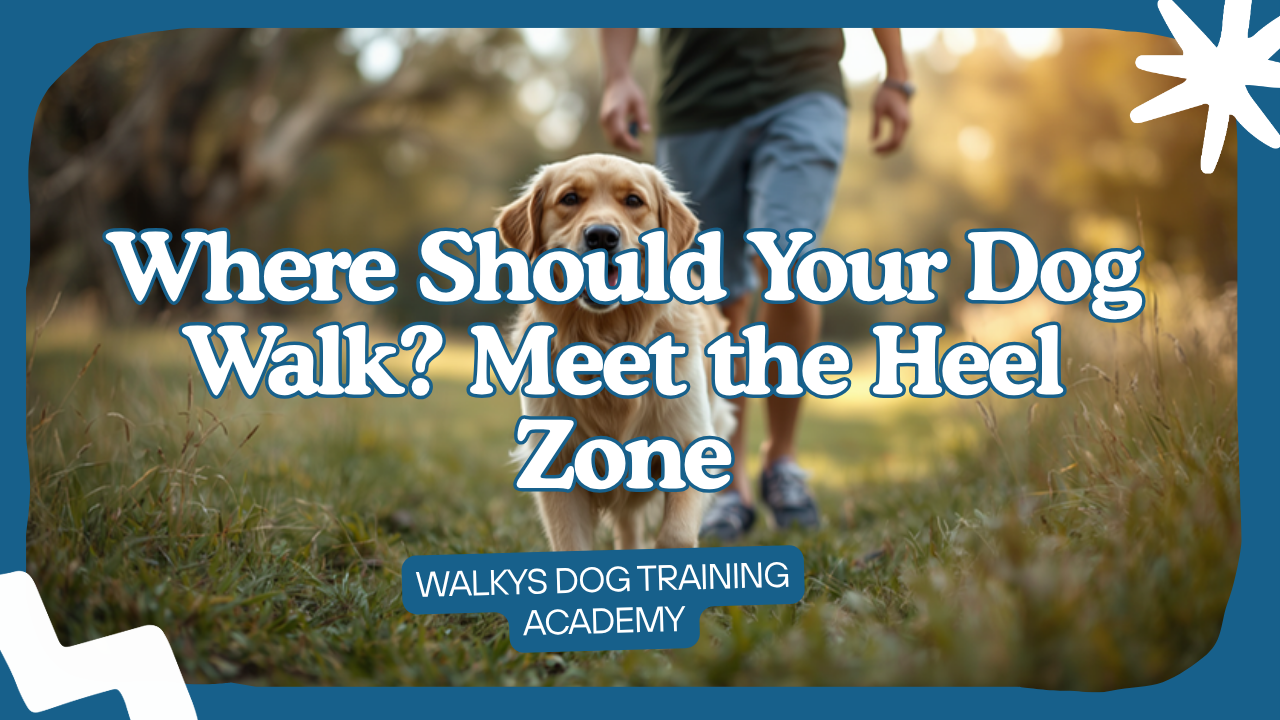
Most owners think a good walk just means a loose lead. That helps, but it skips the real question: where on that lead should your dog actually be? A dog that ranges three metres ahead, criss-crossing your path and hitting the end of the lead, is not walking with you. It is towing you along behind it. The fix is not a tighter lead. It is a clear position.
What Is the Heel Zone?
The heel zone is a small pocket of space beside your leg, roughly from your knee to just behind it, on whichever side you choose. Your dog's shoulder sits level with your leg. Not out front, not pinned tight like a show dog, just parked in that pocket. Once your dog understands the zone, the walk stops being a constant negotiation. They know where home base is, and they keep checking back to it.
Why Does Your Dog Drift Out of Position?
Usually because nobody ever told them a position existed. Most dogs are walked with zero information about where to be, so they default to where the smells are: out front. Out front means they make the decisions. They spot the magpie first, they reach the bin chickens first, they set the pace. A dog leading the walk is a dog whose brain is switched to scan and react, which is the exact state that feeds pulling and lunging. The heel zone hands the decisions back to you without any force.
How Do You Build the Heel Zone?
Start in your hallway or backyard, not on a busy footpath. Hold a treat down at your leg, inside the zone, and take a few steps. The moment your dog is in the pocket, mark it with your word ("yes") and feed in position, right against your leg. Feeding where you want your dog teaches your dog where the value is. If they surge ahead, stop, turn away, and reset. Keep sessions to a few minutes. Early on the goal is not distance, it is reps of your dog choosing the pocket on their own.
What to Try Today
Pick your side and commit to it for the whole session. Do one two-minute round in a boring, low-distraction spot. Every time your dog's shoulder lines up with your leg, mark and feed in position. Say nothing about what they are doing wrong. Just pay them generously for being in the right place. Five clean reps beats a twenty-minute battle every time.
Walking calmly beside you is a skill you build, not a switch you flip. If pulling, reactivity, or lead frustration is part of your daily walk, it is usually one piece of a bigger picture and worth proper coaching. Walkys runs 1:1 sessions and group programs to get you and your dog walking as a team. Start at walkys.com.au.