
June 7, 2026
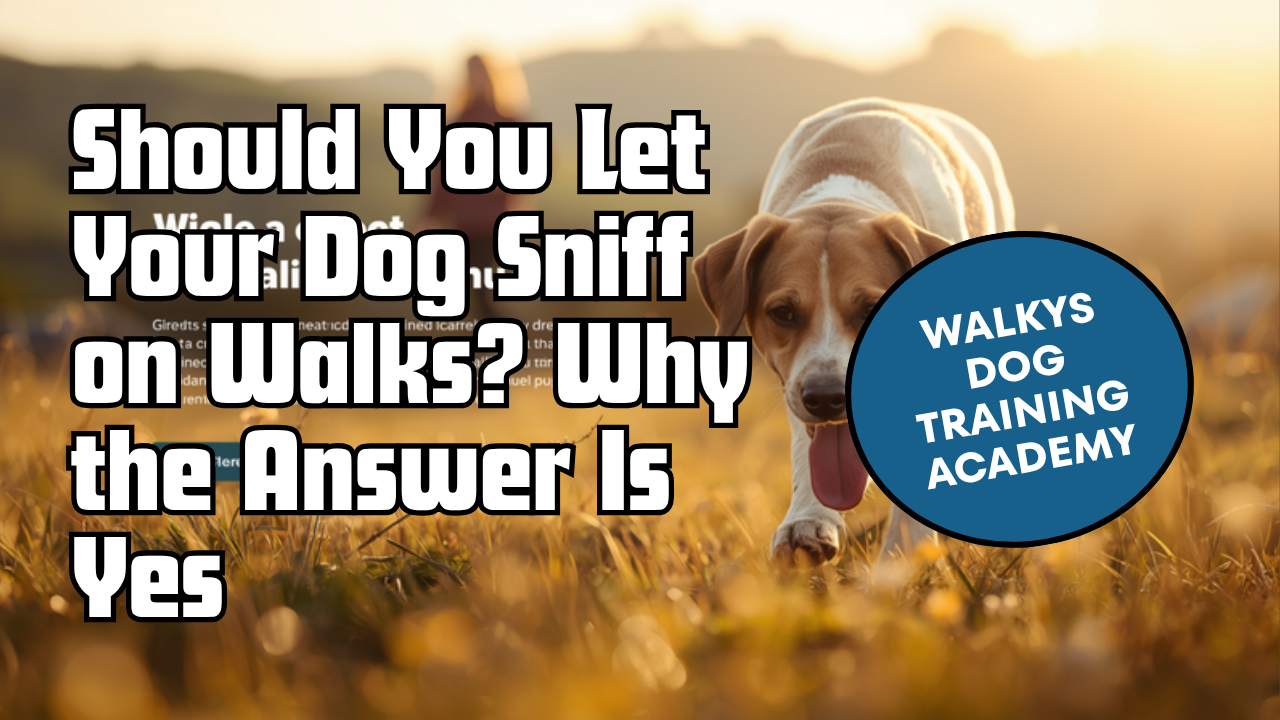
Should You Let Your Dog Sniff on Walks? Why the Answer Is Yes
Most owners treat sniffing as a nuisance. You are trying to get the walk done, and your dog has its nose glued to the same patch of grass for two minutes straight. So you tug the lead and march on. Here is the thing: that sniffing is the most valuable part of the walk, and cutting it short is one reason your dog comes home wired instead of settled.
Why does sniffing tire a dog out more than walking?
A dog reads the world through its nose. One good sniff of a fence post tells your dog who walked past, when they did, and how they were feeling. That is a huge amount of information to process. Mental work drains a dog far faster than physical work does. A 20-minute walk where your dog gets to sniff freely will leave it calmer than a 40-minute forced march where you never stop. The body gets tired on a march. The brain gets tired on a sniff.
How does sniffing lower your dog's stress?
Sniffing is a self-soothing behaviour. When a dog lowers its head and works a scent, its heart rate drops and its arousal comes down. This is why a dog that has been wound up by a passing dog, or a cheeky bin chicken, will often drop its nose to the ground. It is not ignoring you. It is regulating itself. If you let it happen, your dog practises coming down from excitement on its own, which is exactly the skill you want on a walk.
How do you use sniffing as a reward, not a free-for-all?
This does not mean your dog drags you to every lamppost. Sniffing is most powerful when you decide when it happens. Walk a stretch with your dog in the heel zone, then release it with a word like go sniff and let it explore for thirty seconds. Then call it back and walk on. Now sniffing is a reward you hand out for good walking, not a battle you keep losing. Your dog learns that staying with you earns the thing it wants most.
What to Try Today
On your next walk, pick three spots. At each one, stop, say go sniff, and let your dog explore for thirty seconds on a loose lead. No tugging, no rushing. Then say let's go and move on. Watch how much calmer your dog is by the end. You are not wasting time. You are giving the walk its most important ingredient.
Sniffing is one piece of a calm, fulfilled dog. If your dog is reactive, anxious, or pulls so hard you cannot enjoy a walk at all, that is worth proper hands-on help. At Walkys we run 1:1 sessions and group programs that build relaxed, connected walking from the ground up. Learn more at walkys.com.au.