
June 9, 2026
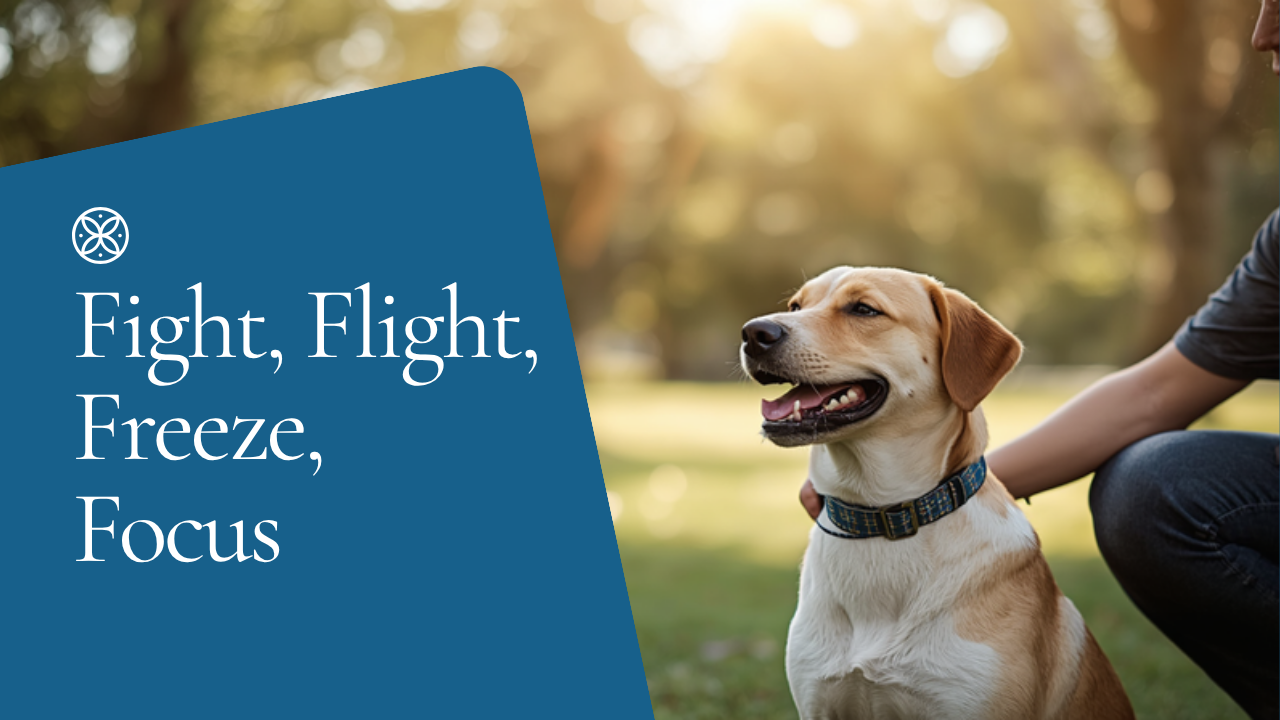
Fight, Flight, Freeze, Focus: The 4 Modes Your Dog's Brain Runs In
You tell people your dog is "being naughty" when it lunges at a magpie or freezes on the footpath. It isn't being naughty. It's running one of four hardwired brain programs, and none of them are a choice.
Every dog, in any moment of pressure, drops into one of four modes: fight, flight, freeze, or focus. The first three are survival reflexes. The fourth is the one we train for. Once you can spot which mode your dog is in, you stop taking the behaviour personally and start working with the brain in front of you.
What are the four modes?
Fight is the loud one. Barking, lunging, snapping. The dog has decided the threat needs to be driven away.
Flight is the bolt. Backing out of the collar, dragging you home, hiding behind your legs. The dog wants distance, now.
Freeze is the quiet one most owners miss. Stiff body, locked legs, a hard stare. People read it as calm. It is the opposite of calm.
Focus is the mode you want. The dog is thinking, taking food, able to hear you. A brain in focus can learn. The other three cannot.
Why does this matter on a walk?
When a dog tips into fight, flight, or freeze, the thinking part of the brain goes offline. Cues you have practised a hundred times in the kitchen vanish. This is not stubbornness. It is biology.
Owners make it worse by drilling commands at a dog that is already over threshold. You cannot train a brain that is in survival mode. You first have to bring it back to focus.
How do you get a dog back to focus?
Distance is your fastest tool. Step back from the trigger, whether it is another dog, a bin chicken, or a skateboard, until your dog can take a treat again. Taking food is your green light. A dog that refuses a high-value reward is telling you it is still in survival mode.
From there, reward any small sign of thinking. A glance back at you. A loosening of the body. You are not asking for a perfect heel. You are rewarding the brain for switching modes.
What to Try Today
On your next walk, name the mode out loud each time your dog reacts. "That's flight." "That's freeze." You are not changing anything yet. You are training your own eye to read your dog before the explosion, not after. Once you can predict the mode, you can manage the distance that prevents it.
Reading these modes is one piece of a bigger picture, and reactive or anxious dogs often need a tailored plan rather than a single tip. If your dog is tipping into fight or flight more often than you would like, the team at Walkys Dog Training Academy can help. We run 1:1 sessions for individual cases and group programs for owners who want to build these skills alongside others. Book a session and start training the brain, not just the behaviour.